NEET UG · 2,240 questions

NEET UG 2015, 2016, 2017, 2018, 2019, 2020, 2021, 2022, 2023, 2024, 2025, 2026 PYQs

Real previous year questions, subject-wise. Try the question, then open the answer and the explanation in Hindi & English – free, no login.

Courses – airGurukul

2,240 questions.

Q2081.
Which of the following statements is not correct for a nucleophile?
नाभिकरागी (nucleophile) के लिए निम्नलिखित में से कौन-सा कथन सही नहीं है?
  1. ANucleophiles attack low e− density sitesनाभिकरागी कम e− घनत्व वाले स्थलों पर आक्रमण करते हैं
  2. BNucleophiles are not electron seekingनाभिकरागी इलेक्ट्रॉन की खोज करने वाले नहीं होते
  3. CNucleophile is a Lewis acidनाभिकरागी एक लूइस अम्ल है
  4. DAmmonia is a nucleophileअमोनिया एक नाभिकरागी है
Show answer

Concept: A nucleophile ("nucleus-loving") is an electron-rich species that donates an electron pair – i.e. a Lewis base.

  1. (C) is wrong: a Lewis acid accepts an electron pair; that describes an electrophile.
  2. (A) correct – it attacks electron-deficient (δ+) centres. (B) correct – it is electron-rich, not electron-seeking.
  3. (D) correct – NH3 has a lone pair on N and acts as a neutral nucleophile.

Short trick: Nucleophile = Lewis base = electron donor; electrophile = Lewis acid = electron acceptor.

Answer: (C) Nucleophile is a Lewis acid

अवधारणा: नाभिकरागी ("नाभिक-प्रेमी") इलेक्ट्रॉन-धनी स्पीशीज़ है जो इलेक्ट्रॉन युग्म दान करती है – अर्थात् लूइस क्षारक।

  1. (C) गलत है: लूइस अम्ल इलेक्ट्रॉन युग्म ग्रहण करता है; यह इलेक्ट्रॉनरागी का वर्णन है।
  2. (A) सही – यह इलेक्ट्रॉन-न्यून (δ+) केंद्रों पर आक्रमण करता है। (B) सही – यह इलेक्ट्रॉन-धनी है, इलेक्ट्रॉन खोजने वाला नहीं।
  3. (D) सही – NH3 में N पर एकाकी युग्म है, यह उदासीन नाभिकरागी है।

शॉर्ट ट्रिक: नाभिकरागी = लूइस क्षारक = इलेक्ट्रॉन दाता; इलेक्ट्रॉनरागी = लूइस अम्ल = इलेक्ट्रॉन ग्राही।

उत्तर: (C) नाभिकरागी एक लूइस अम्ल है
NEET UGChemistryOrganic chemistry basics – nucleophilesNEET UG 2015 · 25 Jul Shift 1
Q2082.
A gas such as carbon monoxide would be most likely to obey the ideal gas law at:
कार्बन मोनोऑक्साइड जैसी गैस किस स्थिति में आदर्श गैस नियम का पालन करने की सर्वाधिक संभावना रखती है?
  1. AHigh temperatures and high pressuresउच्च ताप तथा उच्च दाब
  2. BLow temperatures and low pressuresनिम्न ताप तथा निम्न दाब
  3. CHigh temperatures and low pressuresउच्च ताप तथा निम्न दाब
  4. DLow temperatures and high pressuresनिम्न ताप तथा उच्च दाब
Show answer

Concept: Ideal behaviour needs negligible molecular volume and negligible intermolecular attraction.

  1. Low pressure → molecules far apart, so their own volume is negligible compared with the container volume.
  2. High temperature → high kinetic energy, so attractive forces become unimportant.
  3. Therefore Z → 1 at high T and low P. High P (A, D) and low T (B, D) cause deviations.

Short trick: Real gas becomes ideal when it is "hot and thin": High T, Low P.

Answer: (C) High temperatures and low pressures

अवधारणा: आदर्श व्यवहार के लिए आण्विक आयतन तथा अंतराआण्विक आकर्षण नगण्य होने चाहिए।

  1. निम्न दाब → अणु दूर-दूर, अतः पात्र के आयतन की तुलना में उनका अपना आयतन नगण्य।
  2. उच्च ताप → उच्च गतिज ऊर्जा, अतः आकर्षण बल महत्त्वहीन।
  3. अतः उच्च T तथा निम्न P पर Z → 1। उच्च P (A, D) तथा निम्न T (B, D) विचलन उत्पन्न करते हैं।

शॉर्ट ट्रिक: वास्तविक गैस तब आदर्श बनती है जब वह "गर्म और विरल" हो: उच्च T, निम्न P।

उत्तर: (C) उच्च ताप तथा निम्न दाब

NEET UGChemistryStates of matter – real gasesNEET UG 2015 · 25 Jul Shift 1
Q2083.
The hybridization involved in complex [Ni(CN)4]2− is: (Atomic number of Ni = 28)
संकुल [Ni(CN)4]2− में निहित संकरण है: (Ni का परमाणु क्रमांक = 28)
  1. Ad2sp2
  2. Bd2sp3
  3. Cdsp2
  4. Dsp3
Show answer

Concept: CN− is a strong-field ligand and forces pairing of d electrons.

  1. x + 4(−1) = −2 → Ni2+ = [Ar]3d8.
  2. Strong-field CN− pairs the 8 electrons into four 3d orbitals, leaving one 3d orbital empty.
  3. One 3d + one 4s + two 4p → dsp2: square planar, diamagnetic.

Short trick: Ni2+ (d8) + strong-field ligand + coordination number 4 → dsp2 square planar (also [Pt(NH3)4]2+); with Cl− it is sp3 tetrahedral.

Answer: (C) dsp2

अवधारणा: CN− प्रबल क्षेत्र लिगैंड है तथा d इलेक्ट्रॉनों का युग्मन करवाता है।

  1. x + 4(−1) = −2 → Ni2+ = [Ar]3d8।
  2. प्रबल क्षेत्र CN− 8 इलेक्ट्रॉनों को चार 3d कक्षकों में युग्मित कर देता है, एक 3d कक्षक रिक्त रहता है।
  3. एक 3d + एक 4s + दो 4p → dsp2: वर्ग समतलीय, प्रतिचुंबकीय।

शॉर्ट ट्रिक: Ni2+ (d8) + प्रबल क्षेत्र लिगैंड + उपसहसंयोजन संख्या 4 → dsp2 वर्ग समतलीय (जैसे [Pt(NH3)4]2+); Cl− के साथ sp3 चतुष्फलकीय।

उत्तर: (C) dsp2

NEET UGChemistryCoordination compounds – VBT hybridisationNEET UG 2015 · 25 Jul Shift 1
Q2084.
The heat of combustion of carbon to CO2 is -393.5 kJ/mol. The heat released upon formation of 35.2 g of CO2 from carbon and oxygen gas is:
कार्बन के CO2 में दहन की ऊष्मा -393.5 kJ/mol है। कार्बन तथा ऑक्सीजन गैस से 35.2 g CO2 बनने पर मुक्त ऊष्मा है:
  1. A−630 kJ
  2. B−3.15 kJ
  3. C−315 kJ
  4. D+315 kJ
Show answer

Concept: C(s) + O2(g) → CO2(g); ΔH = −393.5 kJ per mole (44 g) of CO2.

  1. Moles of CO2 = 35.2/44 = 0.8 mol.
  2. ΔH = 0.8 × (−393.5) = −314.8 ≈ −315 kJ.

Short trick: 35.2/44 = 0.8 exactly; 0.8 × 400 ≈ 315 – sign stays negative (heat released), so (D) +315 is the sign trap.

Answer: (C) −315 kJ

अवधारणा: C(s) + O2(g) → CO2(g); CO2 के प्रति मोल (44 g) ΔH = −393.5 kJ।

  1. CO2 के मोल = 35.2/44 = 0.8 mol।
  2. ΔH = 0.8 × (−393.5) = −314.8 ≈ −315 kJ।

शॉर्ट ट्रिक: 35.2/44 = ठीक 0.8; 0.8 × 400 ≈ 315 – चिह्न ऋणात्मक रहेगा (ऊष्मा मुक्त), अतः (D) +315 चिह्न वाला भ्रामक विकल्प है।

उत्तर: (C) −315 kJ

NEET UGChemistryThermodynamics – enthalpy of combustionNEET UG 2015 · 25 Jul Shift 1
Q2085.
20.0 g of a magnesium carbonate sample decomposes on heating to give carbon dioxide and 8.0 g magnesium oxide. What will be the percentage purity of magnesium carbonate in the sample?
(Atomic weight: Mg = 24)
मैग्नीशियम कार्बोनेट का 20.0 g नमूना गर्म करने पर विघटित होकर कार्बन डाइऑक्साइड तथा 8.0 g मैग्नीशियम ऑक्साइड देता है। नमूने में मैग्नीशियम कार्बोनेट की प्रतिशत शुद्धता क्या होगी?
(परमाणु भार: Mg = 24)
  1. A60
  2. B84
  3. C75
  4. D96
Show answer

Concept: MgCO3(s) → MgO(s) + CO2(g): 1 mol MgCO3 (84 g) gives 1 mol MgO (40 g).

  1. Moles of MgO formed = 8.0/40 = 0.2 mol.
  2. So pure MgCO3 = 0.2 mol × 84 g mol−1 = 16.8 g.
  3. Purity = 16.8/20.0 × 100 = 84%.

Short trick: 84 g MgCO3 → 40 g MgO; 8 g MgO is 1/5 of 40 → 1/5 of 84 = 16.8 g out of 20 g = 84%.

Answer: (B) 84

अवधारणा: MgCO3(s) → MgO(s) + CO2(g): 1 mol MgCO3 (84 g) से 1 mol MgO (40 g) बनता है।

  1. बने MgO के मोल = 8.0/40 = 0.2 mol।
  2. अतः शुद्ध MgCO3 = 0.2 mol × 84 g mol−1 = 16.8 g।
  3. शुद्धता = 16.8/20.0 × 100 = 84%।

शॉर्ट ट्रिक: 84 g MgCO3 → 40 g MgO; 8 g MgO, 40 का 1/5 है → 84 का 1/5 = 16.8 g, 20 g में से = 84%।

उत्तर: (B) 84

NEET UGChemistryStoichiometry – percentage purityNEET UG 2015 · 25 Jul Shift 1
Q2086.
What is the mole fraction of the solute in a 1.00 m aqueous solution?
1.00 m जलीय विलयन में विलेय का मोल अंश क्या है?
  1. A0.0354
  2. B0.0177
  3. C0.177
  4. D1.770
Show answer

Concept: 1.00 m = 1 mol solute in 1000 g (1 kg) of water.

  1. Moles of water = 1000/18 = 55.56 mol.
  2. xsolute=11+55.56=156.56=0.0177.

Short trick: For any aqueous molality m: x ≈ m/(m + 55.5). Mole fraction must be < 1, so (D) 1.770 is impossible at once.

Answer: (B) 0.0177

अवधारणा: 1.00 m = 1000 g (1 kg) जल में 1 mol विलेय।

  1. जल के मोल = 1000/18 = 55.56 mol।
  2. xsolute=11+55.56=156.56=0.0177।

शॉर्ट ट्रिक: किसी भी जलीय मोललता m के लिए: x ≈ m/(m + 55.5)। मोल अंश < 1 होना चाहिए, अतः (D) 1.770 तुरंत असंभव है।

उत्तर: (B) 0.0177

NEET UGChemistrySolutions – molality and mole fractionNEET UG 2015 · 25 Jul Shift 1
Q2087.
The correct statement regarding defects in crystalline solids is :
क्रिस्टलीय ठोसों में दोषों के संबंध में सही कथन है:
  1. AFrenkel defect is a dislocation defectफ्रेंकेल दोष एक विस्थापन (dislocation) दोष है
  2. BFrenkel defect is found in halides of alkaline metalsफ्रेंकेल दोष क्षारीय धातुओं के हैलाइडों में पाया जाता है
  3. CSchottky defects have no effect on the density of crystalline solidsशॉट्की दोषों का क्रिस्टलीय ठोसों के घनत्व पर कोई प्रभाव नहीं पड़ता
  4. DFrenkel defects decrease the density of crystalline solidsफ्रेंकेल दोष क्रिस्टलीय ठोसों के घनत्व को घटाते हैं
Show answer

Concept: In a Frenkel defect the smaller ion (usually the cation) leaves its lattice site and occupies an interstitial site – it is a dislocation defect.

  1. (A) correct – the ion is dislocated to an interstitial position, creating a vacancy + interstitial.
  2. (B) wrong – Frenkel defect is shown by ZnS, AgCl, AgBr, AgI (large size difference), not by alkali metal halides (they show Schottky).
  3. (C) wrong – Schottky defects (missing ion pairs) decrease the density.
  4. (D) wrong – in Frenkel no ion leaves the crystal, so density is unchanged.

Short trick: Schottky = ions "Sent out" → density falls; Frenkel = ions "shifted inside" → density same.

Answer: (A) Frenkel defect is a dislocation defect

अवधारणा: फ्रेंकेल दोष में छोटा आयन (प्रायः धनायन) अपने जालक स्थल को छोड़कर अंतराकाशी स्थल में चला जाता है – यह विस्थापन दोष है।

  1. (A) सही – आयन अंतराकाशी स्थिति में विस्थापित होता है, जिससे एक रिक्ति + एक अंतराकाशी बनता है।
  2. (B) गलत – फ्रेंकेल दोष ZnS, AgCl, AgBr, AgI (आकार में बड़ा अंतर) में मिलता है, क्षार धातु हैलाइडों में नहीं (उनमें शॉट्की दोष होता है)।
  3. (C) गलत – शॉट्की दोष (आयन युग्मों का लुप्त होना) घनत्व घटाते हैं।
  4. (D) गलत – फ्रेंकेल में कोई आयन क्रिस्टल नहीं छोड़ता, अतः घनत्व अपरिवर्तित रहता है।

शॉर्ट ट्रिक: शॉट्की = आयन "बाहर" → घनत्व घटता है; फ्रेंकेल = आयन "भीतर ही खिसका" → घनत्व वही।

उत्तर: (A) फ्रेंकेल दोष एक विस्थापन दोष है

NEET UGChemistrySolid state – point defectsNEET UG 2015 · 25 Jul Shift 1
Q2088.
The stability of +1 oxidation state among Al, Ga, In and Tl increases in the sequence:
Al, Ga, In तथा Tl में +1 ऑक्सीकरण अवस्था का स्थायित्व किस क्रम में बढ़ता है?
  1. ATl < In < Ga < Al
  2. BIn < Tl < Ga < Al
  3. CGa < In < Al < Tl
  4. DAl < Ga < In < Tl
Show answer

Concept: Inert pair effect: down group 13 the ns2 pair is held more tightly (poor shielding by d and f electrons), so the lower +1 state becomes more stable.

  1. Al: +3 only (practically); Ga, In: +1 increasingly possible; Tl: +1 more stable than +3.
  2. Increasing stability of +1: Al < Ga < In < Tl → (D).
  3. (A) is the reverse (that is the order of +3 stability).

Short trick: Heavier the p-block element, more stable its "group valency − 2" state (Tl+, Pb2+, Bi3+).

Answer: (D) Al < Ga < In < Tl

अवधारणा: अक्रिय युग्म प्रभाव: वर्ग 13 में नीचे जाने पर ns2 युग्म अधिक दृढ़ता से बँधा रहता है (d व f इलेक्ट्रॉनों का दुर्बल परिरक्षण), अतः निम्न +1 अवस्था अधिक स्थायी होती जाती है।

  1. Al: व्यावहारिक रूप से केवल +3; Ga, In: +1 क्रमशः अधिक संभव; Tl: +1, +3 से अधिक स्थायी।
  2. +1 का बढ़ता स्थायित्व: Al < Ga < In < Tl → (D)।
  3. (A) उलटा क्रम है (यह +3 के स्थायित्व का क्रम है)।

शॉर्ट ट्रिक: p-ब्लॉक तत्व जितना भारी, उसकी "वर्ग संयोजकता − 2" अवस्था उतनी स्थायी (Tl+, Pb2+, Bi3+)।

उत्तर: (D) Al < Ga < In < Tl

NEET UGChemistryp-block (group 13) – inert pair effectNEET UG 2015 · 25 Jul Shift 1
Q2089.
Two possible stereo-structures of CH3CHOH · COOH, which are optically active, are called:
CH3CHOH · COOH की दो संभावित त्रिविम-संरचनाएँ, जो प्रकाशिक सक्रिय हैं, कहलाती हैं:
  1. AEnantiomersप्रतिबिंबरूपी (Enantiomers)
  2. BMesomersमीसोमर (Mesomers)
  3. CDiastereomersअप्रतिबिंबी त्रिविम समावयवी (Diastereomers)
  4. DAtropisomersएट्रोपसमावयवी (Atropisomers)
Show answer

Concept: Lactic acid has one chiral carbon (bearing H, OH, CH3, COOH), so it exists as two non-superimposable mirror images.

  1. Non-superimposable mirror-image pairs are enantiomers: (+)- and (−)-lactic acid.
  2. Diastereomers need at least two stereocentres (not mirror images); mesomers are resonance forms (or "meso" forms, which are optically inactive); atropisomers arise from restricted rotation about a single bond (e.g. biphenyls).

Short trick: One chiral centre → only 2 stereoisomers → they must be mirror images = enantiomers.

Answer: (A) Enantiomers

अवधारणा: लैक्टिक अम्ल में एक काइरल कार्बन (H, OH, CH3, COOH से जुड़ा) है, अतः यह दो अध्यारोपित न होने वाले दर्पण प्रतिबिंबों के रूप में पाया जाता है।

  1. अध्यारोपित न होने वाले दर्पण-प्रतिबिंब युग्म प्रतिबिंबरूपी (enantiomers) हैं: (+)- तथा (−)-लैक्टिक अम्ल।
  2. अप्रतिबिंबी त्रिविम समावयवियों के लिए कम से कम दो त्रिविम केंद्र चाहिए (दर्पण प्रतिबिंब नहीं); मीसोमर अनुनादी रूप हैं (या "मीसो" रूप, जो प्रकाशिक निष्क्रिय होते हैं); एट्रोपसमावयवी एकल आबंध के परितः प्रतिबंधित घूर्णन से बनते हैं (जैसे बाइफेनिल)।

शॉर्ट ट्रिक: एक काइरल केंद्र → केवल 2 त्रिविम समावयवी → वे दर्पण प्रतिबिंब ही होंगे = प्रतिबिंबरूपी।

उत्तर: (A) प्रतिबिंबरूपी (Enantiomers)

NEET UGChemistryStereochemistry – optical isomerismNEET UG 2015 · 25 Jul Shift 1
Q2090.
The following reaction

is known by the name:
निम्नलिखित अभिक्रिया

किस नाम से जानी जाती है?
  1. AAcetylation reactionऐसीटिलन अभिक्रिया
  2. BSchotten-Baumen reactionशॉटन-बाउमान अभिक्रिया
  3. CFriedel-Craft’s reactionफ्रीडेल-क्राफ्ट्स अभिक्रिया
  4. DPerkin’s reactionपर्किन अभिक्रिया
Show answer

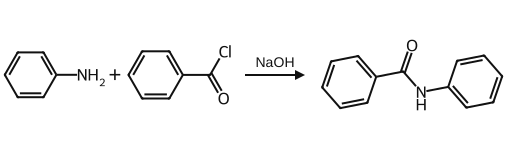
Concept: Benzoylation of an amine (or phenol) with benzoyl chloride in the presence of aqueous NaOH is the Schotten–Baumann reaction.

  1. C6H5NH2 + C6H5COCl → C6H5NHCOC6H5 (benzanilide) + HCl; NaOH neutralises HCl and drives the reaction forward.
  2. (A) Acetylation introduces CH3CO–, not C6H5CO–. (C) Friedel–Crafts needs anhydrous AlCl3 and acylates the ring carbon. (D) Perkin: aromatic aldehyde + anhydride → cinnamic acid.

Short trick: Benzoyl chloride + aqueous NaOH + –NH2/–OH = Schotten–Baumann, every time.

Answer: (B) Schotten-Baumann reaction

अवधारणा: जलीय NaOH की उपस्थिति में बेन्ज़ॉयल क्लोराइड द्वारा ऐमीन (या फीनॉल) का बेन्ज़ॉयलन शॉटन–बाउमान अभिक्रिया है।

  1. C6H5NH2 + C6H5COCl → C6H5NHCOC6H5 (बेन्ज़ैनिलाइड) + HCl; NaOH, HCl को उदासीन करके अभिक्रिया को आगे बढ़ाता है।
  2. (A) ऐसीटिलन में CH3CO– जुड़ता है, C6H5CO– नहीं। (C) फ्रीडेल–क्राफ्ट्स में निर्जल AlCl3 चाहिए तथा वलय के कार्बन का ऐसिलन होता है। (D) पर्किन: ऐरोमैटिक ऐल्डिहाइड + ऐनहाइड्राइड → सिनैमिक अम्ल।

शॉर्ट ट्रिक: बेन्ज़ॉयल क्लोराइड + जलीय NaOH + –NH2/–OH = सदैव शॉटन–बाउमान।

उत्तर: (B) शॉटन-बाउमान अभिक्रिया

NEET UGChemistryAmines – benzoylation (Schotten–Baumann)NEET UG 2015 · 25 Jul Shift 1
Q2091.
The sum of coordination number and oxidation number of metal M in the complex [M(en)2(C2O4)]Cl (Where en is ethylenediamine) is:
संकुल [M(en)2(C2O4)]Cl (जहाँ en एथिलीनडाइऐमीन है) में धातु M की उपसहसंयोजन संख्या तथा ऑक्सीकरण संख्या का योग है:
  1. A7
  2. B8
  3. C9
  4. D6
Show answer

Concept: en is a neutral bidentate ligand; C2O42− (oxalate) is a dianionic bidentate ligand.

  1. Complex ion = [M(en)2(C2O4)]+ (one Cl− outside).
  2. Oxidation state: x + 0 + (−2) = +1 → x = +3.
  3. Coordination number = 2 × 2 (en) + 2 (ox) = 6.
  4. Sum = 3 + 6 = 9.

Short trick: CN counts donor atoms, not ligands: each bidentate ligand counts 2.

Answer: (C) 9

अवधारणा: en उदासीन द्विदंतुर लिगैंड है; C2O42− (ऑक्सेलेट) द्विऋणायनी द्विदंतुर लिगैंड है।

  1. संकुल आयन = [M(en)2(C2O4)]+ (एक Cl− बाहर)।
  2. ऑक्सीकरण अवस्था: x + 0 + (−2) = +1 → x = +3।
  3. उपसहसंयोजन संख्या = 2 × 2 (en) + 2 (ox) = 6।
  4. योग = 3 + 6 = 9।

शॉर्ट ट्रिक: उपसहसंयोजन संख्या दाता परमाणु गिनती है, लिगैंड नहीं: प्रत्येक द्विदंतुर लिगैंड 2 गिना जाता है।

उत्तर: (C) 9

NEET UGChemistryCoordination compounds – CN and oxidation stateNEET UG 2015 · 25 Jul Shift 1
Q2092.
Reaction of a carbonyl compound with one of the following reagents involves nucleophilic addition followed by elimination of water. The reagent is:
किसी कार्बोनिल यौगिक की निम्नलिखित में से एक अभिकर्मक के साथ अभिक्रिया में नाभिकरागी योग के बाद जल का विलोपन होता है। वह अभिकर्मक है:
  1. AHydrocyanic acidहाइड्रोसायनिक अम्ल
  2. BSodium hydrogen sulphiteसोडियम हाइड्रोजन सल्फाइट
  3. CA Grignard reagentएक ग्रीन्यार अभिकर्मक
  4. DHydrazine in presence of feebly acidic solutionअत्यंत दुर्बल अम्लीय विलयन की उपस्थिति में हाइड्रैज़ीन
Show answer

Concept: Ammonia derivatives (H2N–Z) add to C=O and then lose H2O to form C=N–Z; mildly acidic pH (≈ 4–5) activates C=O without protonating the nucleophile.

  1. >C=O + H2N–NH2 → >C(OH)–NHNH2 → >C=N–NH2 (hydrazone) + H2O.
  2. (A) HCN → cyanohydrin and (B) NaHSO3 → bisulphite adduct: addition only, no water lost.
  3. (C) Grignard reagent → alkoxide → alcohol after hydrolysis: addition only.

Short trick: C=N products (oxime, hydrazone, semicarbazone, 2,4-DNP) = addition + elimination; C–OH/C–CN/C–SO3Na products = addition only.

Answer: (D) Hydrazine in presence of feebly acidic solution

अवधारणा: अमोनिया व्युत्पन्न (H2N–Z) C=O पर जुड़ते हैं तथा फिर H2O निकालकर C=N–Z बनाते हैं; हल्का अम्लीय pH (≈ 4–5) नाभिकरागी को प्रोटॉनित किए बिना C=O को सक्रिय करता है।

  1. >C=O + H2N–NH2 → >C(OH)–NHNH2 → >C=N–NH2 (हाइड्रैज़ोन) + H2O।
  2. (A) HCN → सायनोहाइड्रिन तथा (B) NaHSO3 → बाइसल्फाइट योगज: केवल योग, जल नहीं निकलता।
  3. (C) ग्रीन्यार अभिकर्मक → ऐल्कॉक्साइड → जल-अपघटन पर ऐल्कोहॉल: केवल योग।

शॉर्ट ट्रिक: C=N उत्पाद (ऑक्सिम, हाइड्रैज़ोन, सेमीकार्बेज़ोन, 2,4-DNP) = योग + विलोपन; C–OH/C–CN/C–SO3Na उत्पाद = केवल योग।

उत्तर: (D) अत्यंत दुर्बल अम्लीय विलयन में हाइड्रैज़ीन

NEET UGChemistryAldehydes & ketones – addition–eliminationNEET UG 2015 · 25 Jul Shift 1
Q2093.
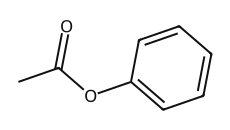
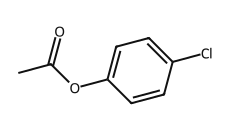
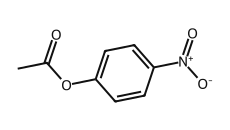
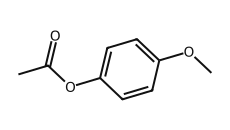
Which one of the following esters gets hydrolyzed most easily under alkaline conditions?
निम्नलिखित में से कौन-सा एस्टर क्षारीय परिस्थितियों में सबसे आसानी से जल-अपघटित होता है?
  1. A
  2. B
  3. C
  4. D
Show answer

Concept: Alkaline hydrolysis = nucleophilic acyl substitution by OH−; it is faster when the carbonyl carbon is more electrophilic and the leaving aryloxide ion is more stable.

  1. p-NO2 (strong –R, –I) withdraws electrons: makes C=O more δ+ and stabilises the p-nitrophenoxide leaving group by resonance → fastest.
  2. p-Cl (–I > +R) helps a little; unsubstituted phenyl acetate is intermediate.
  3. p-OCH3 (+R) donates electrons → slowest.
  4. Order: NO2 (C) > Cl (B) > H (A) > OCH3 (D).

Short trick: Rate of attack on C=O follows the acidity of the leaving phenol: p-nitrophenol is the strongest acid → its ester hydrolyses fastest.

Answer: (C) p-Nitrophenyl acetate

अवधारणा: क्षारीय जल-अपघटन = OH− द्वारा नाभिकरागी ऐसिल प्रतिस्थापन; यह तब तेज़ होता है जब कार्बोनिल कार्बन अधिक इलेक्ट्रॉनरागी हो तथा निकलने वाला ऐरिलऑक्साइड आयन अधिक स्थायी हो।

  1. p-NO2 (प्रबल –R, –I) इलेक्ट्रॉन खींचता है: C=O को अधिक δ+ बनाता है तथा p-नाइट्रोफीनॉक्साइड अवशिष्ट समूह को अनुनाद द्वारा स्थायी करता है → सबसे तेज़।
  2. p-Cl (–I > +R) थोड़ी सहायता करता है; अप्रतिस्थापित फेनिल ऐसीटेट बीच में है।
  3. p-OCH3 (+R) इलेक्ट्रॉन देता है → सबसे धीमा।
  4. क्रम: NO2 (C) > Cl (B) > H (A) > OCH3 (D)।

शॉर्ट ट्रिक: C=O पर आक्रमण की दर निकलने वाले फीनॉल की अम्लता के अनुरूप है: p-नाइट्रोफीनॉल सबसे प्रबल अम्ल → उसका एस्टर सबसे तेज़ जल-अपघटित।

उत्तर: (C) p-नाइट्रोफेनिल ऐसीटेट

NEET UGChemistryCarboxylic acid derivatives – ester hydrolysisNEET UG 2015 · 25 Jul Shift 1
Q2094.
In an SN1 reaction on chiral centres, there is:
काइरल केंद्रों पर SN1 अभिक्रिया में होता है:
  1. A100% retention100% धारण (retention)
  2. B100% inversion100% प्रतिलोमन (inversion)
  3. C100% racemization100% रेसिमीकरण
  4. DInversion more than retention leading to partial racemizationधारण की अपेक्षा अधिक प्रतिलोमन, जिससे आंशिक रेसिमीकरण
Show answer

Concept: SN1 goes through a planar carbocation, which the nucleophile can attack from either face.

  1. Ideally both faces → racemic mixture.
  2. In practice the departing leaving group stays close (ion pair) and partly shields the front face, so back-side attack (inversion) is a little more frequent.
  3. Result: inversion slightly exceeds retention → partial racemization (D). 100% inversion is SN2; 100% retention/racemization is not observed.

Short trick: SN2 → complete inversion; SN1 → racemization with excess inversion (ion-pair shielding).

Answer: (D) Inversion more than retention leading to partial racemization

अवधारणा: SN1 एक समतलीय कार्बधनायन से होकर चलती है, जिस पर नाभिकरागी किसी भी फलक से आक्रमण कर सकता है।

  1. आदर्श रूप से दोनों फलक → रेसिमिक मिश्रण।
  2. व्यवहार में जाता हुआ अवशिष्ट समूह पास रहता है (आयन युग्म) तथा सामने के फलक को आंशिक रूप से ढक देता है, अतः पीछे से आक्रमण (प्रतिलोमन) थोड़ा अधिक होता है।
  3. परिणाम: प्रतिलोमन धारण से कुछ अधिक → आंशिक रेसिमीकरण (D)। 100% प्रतिलोमन SN2 में होता है; 100% धारण/रेसिमीकरण नहीं देखा जाता।

शॉर्ट ट्रिक: SN2 → पूर्ण प्रतिलोमन; SN1 → अधिक प्रतिलोमन सहित रेसिमीकरण (आयन-युग्म परिरक्षण)।

उत्तर: (D) धारण की अपेक्षा अधिक प्रतिलोमन, जिससे आंशिक रेसिमीकरण

NEET UGChemistryHaloalkanes – S<sub>N</sub>1 stereochemistryNEET UG 2015 · 25 Jul Shift 1
Q2095.
The rate constant of the reaction A ⟶ B is 0.6 × 10⁻³ mole per second. If the concentration of A is 5M, then concentration of B after 20 minutes is:
अभिक्रिया A ⟶ B का वेग स्थिरांक 0.6 × 10⁻³ मोल प्रति सेकंड है। यदि A की सांद्रता 5M है, तो 20 मिनट बाद B की सांद्रता है:
  1. A0.36 M
  2. B0.72 M
  3. C1.08 M
  4. D3.60 M
Show answer

Concept: The unit of k (mol per second, i.e. mol L−1 s−1) shows a zero-order reaction: x = kt, independent of [A].

  1. t = 20 min = 1200 s.
  2. [B] = x = kt = 0.6 × 10−3 × 1200 = 0.72 M.
  3. Since 0.72 M < 5 M, A is not used up, so zero-order kinetics holds throughout.

Short trick: Read the order from k’s unit: conc·time−1 → zero; time−1 → first. The 5 M is a distractor for zero order.

Answer: (B) 0.72 M

अवधारणा: k की इकाई (मोल प्रति सेकंड, अर्थात् mol L−1 s−1) शून्य कोटि अभिक्रिया दर्शाती है: x = kt, [A] से स्वतंत्र।

  1. t = 20 min = 1200 s।
  2. [B] = x = kt = 0.6 × 10−3 × 1200 = 0.72 M।
  3. चूँकि 0.72 M < 5 M, A समाप्त नहीं होता, अतः पूरे समय शून्य कोटि बलगतिकी लागू रहती है।

शॉर्ट ट्रिक: k की इकाई से कोटि पढ़ें: सांद्रता·समय−1 → शून्य; समय−1 → प्रथम। शून्य कोटि में 5 M केवल भ्रमित करने के लिए है।

उत्तर: (B) 0.72 M

NEET UGChemistryChemical kinetics – zero-order reactionNEET UG 2015 · 25 Jul Shift 1
Q2096.
What is the pH of the resulting solution when equal volumes of 0.1 m NaOH and 0.01 M HCl are mixed?
0.1 m NaOH तथा 0.01 M HCl के समान आयतनों को मिलाने पर परिणामी विलयन का pH क्या है?
  1. A7.0
  2. B1.04
  3. C12.65
  4. D2.0
Show answer

Concept: Strong acid + strong base: find the excess, divide by the total volume.

  1. Take V L each: OH− = 0.1V mol, H+ = 0.01V mol → excess OH− = 0.09V mol.
  2. Total volume = 2V → [OH−] = 0.09/2 = 0.045 M.
  3. pOH = −log(0.045) = 1.35 → pH = 14 − 1.35 = 12.65.

Short trick: Base is in excess, so the answer must be > 7 – only 12.65 qualifies; no calculation needed for elimination.

Answer: (C) 12.65

अवधारणा: प्रबल अम्ल + प्रबल क्षार: आधिक्य ज्ञात करें, फिर कुल आयतन से भाग दें।

  1. प्रत्येक V L लें: OH− = 0.1V mol, H+ = 0.01V mol → आधिक्य OH− = 0.09V mol।
  2. कुल आयतन = 2V → [OH−] = 0.09/2 = 0.045 M।
  3. pOH = −log(0.045) = 1.35 → pH = 14 − 1.35 = 12.65।

शॉर्ट ट्रिक: क्षार आधिक्य में है, अतः उत्तर > 7 होना चाहिए – केवल 12.65 उपयुक्त है; विलोपन के लिए गणना आवश्यक नहीं।

उत्तर: (C) 12.65

NEET UGChemistryIonic equilibrium – pH of mixtureNEET UG 2015 · 25 Jul Shift 1
Q2097.
Number of possible isomers for the complex [Co(en)2Cl2]Cl will be: (en = ethylene diamine)
संकुल [Co(en)2Cl2]Cl के संभावित समावयवों की संख्या होगी: (en = एथिलीन डाइऐमीन)
  1. A3
  2. B4
  3. C2
  4. D1
Show answer

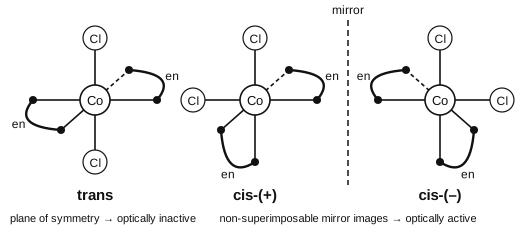
Concept: [M(AA)2B2] octahedral complexes show geometrical isomerism, and the cis form is chiral.

  1. Geometrical: trans (Cl’s opposite) and cis (Cl’s adjacent).
  2. trans has a plane of symmetry → optically inactive (1 isomer).
  3. cis has no plane of symmetry → a pair of enantiomers, d and l (2 isomers).
  4. Total = 1 + 2 = 3 stereoisomers.

Short trick: [M(AA)2B2] → 3 (trans + d-cis + l-cis); classic NCERT example is [CoCl2(en)2]+.

Answer: (A) 3

अवधारणा: [M(AA)2B2] अष्टफलकीय संकुल ज्यामितीय समावयवता दर्शाते हैं, तथा सिस रूप काइरल होता है।

  1. ज्यामितीय: ट्रांस (Cl आमने-सामने) तथा सिस (Cl समीपवर्ती)।
  2. ट्रांस में सममिति तल है → प्रकाशिक निष्क्रिय (1 समावयव)।
  3. सिस में सममिति तल नहीं है → प्रतिबिंबरूपी युग्म, d तथा l (2 समावयव)।
  4. कुल = 1 + 2 = 3 त्रिविम समावयव।

शॉर्ट ट्रिक: [M(AA)2B2] → 3 (ट्रांस + d-सिस + l-सिस); NCERT का मानक उदाहरण [CoCl2(en)2]+ है।

उत्तर: (A) 3

NEET UGChemistryCoordination compounds – isomerismNEET UG 2015 · 25 Jul Shift 1
Q2098.
The variation of the boiling points of the hydrogen halides is in the order HF > HI > HBr > HCl. What explains the higher boiling point of hydrogen fluoride?
हाइड्रोजन हैलाइडों के क्वथनांकों में परिवर्तन का क्रम HF > HI > HBr > HCl है। हाइड्रोजन फ्लुओराइड के उच्च क्वथनांक की व्याख्या क्या है?
  1. AThe bond energy of HF molecules is greater than in other hydrogen halides.HF अणुओं की आबंध ऊर्जा अन्य हाइड्रोजन हैलाइडों से अधिक है।
  2. BThe effect of nuclear shielding is much reduced in fluorine which polarizes the HF molecule.फ्लुओरीन में नाभिकीय परिरक्षण का प्रभाव बहुत कम है जो HF अणु को ध्रुवित करता है।
  3. CThe electronegativity of fluorine is much higher than for other elements in the group.फ्लुओरीन की विद्युत्ऋणात्मकता वर्ग के अन्य तत्वों से बहुत अधिक है।
  4. DThere is strong hydrogen bonding between HF molecules.HF अणुओं के बीच प्रबल हाइड्रोजन आबंधन है।
Show answer

Concept: Boiling involves breaking intermolecular forces, not covalent bonds.

  1. HF molecules are linked by strong intermolecular H-bonds (F–H···F), which need extra energy to separate → anomalously high b.p.
  2. HCl → HBr → HI rise is due to increasing van der Waals forces with size.
  3. (A) Bond energy concerns the intramolecular H–F bond, not broken on boiling. (B), (C) only explain why H-bonding is possible; the direct reason is H-bonding itself.

Short trick: Same anomaly as H2O (group 16) and NH3 (group 15): first member + H-bonding = highest/anomalous b.p.

Answer: (D) There is strong hydrogen bonding between HF molecules.

अवधारणा: क्वथन में अंतराआण्विक बल टूटते हैं, सहसंयोजी आबंध नहीं।

  1. HF अणु प्रबल अंतराआण्विक H-आबंधों (F–H···F) से जुड़े होते हैं, जिन्हें अलग करने में अतिरिक्त ऊर्जा लगती है → असामान्य रूप से उच्च क्वथनांक।
  2. HCl → HBr → HI में वृद्धि आकार के साथ बढ़ते वान्डर वाल्स बलों के कारण है।
  3. (A) आबंध ऊर्जा अंतःआण्विक H–F आबंध की है, जो क्वथन में नहीं टूटता। (B), (C) केवल बताते हैं कि H-आबंधन क्यों संभव है; प्रत्यक्ष कारण स्वयं H-आबंधन है।

शॉर्ट ट्रिक: H2O (वर्ग 16) तथा NH3 (वर्ग 15) में भी यही असामान्यता: पहला सदस्य + H-आबंधन = सर्वाधिक/असामान्य क्वथनांक।

उत्तर: (D) HF अणुओं के बीच प्रबल हाइड्रोजन आबंधन है।

NEET UGChemistryHydrogen bonding – boiling points of HXNEET UG 2015 · 25 Jul Shift 1
Q2099.
What is the mass of the precipitate formed when 50 mL of 16.9% solution of AgNO3 is mixed with 50 mL of 5.8% NaCl solution?
जब AgNO3 के 16.9% विलयन के 50 mL को 5.8% NaCl विलयन के 50 mL के साथ मिलाया जाता है, तो बने अवक्षेप का द्रव्यमान क्या है?
  1. A7 g
  2. B14 g
  3. C28 g
  4. D3.5 g
Show answer

Concept: AgNO3 + NaCl → AgCl↓ + NaNO3 (1 : 1); % here is w/V (g per 100 mL).

  1. AgNO3 in 50 mL = 16.9/2 = 8.45 g → 8.45/170 = 0.0497 mol.
  2. NaCl in 50 mL = 5.8/2 = 2.9 g → 2.9/58.5 = 0.0496 mol.
  3. Both ≈ 0.0497 mol (NaCl just limiting) → AgCl = 0.0496 × 143.5 = 7.1 ≈ 7 g.

Short trick: Amounts are chosen to be equimolar (≈ 0.05 mol each) – 0.05 × 143.5 ≈ 7 g directly.

Answer: (A) 7 g

अवधारणा: AgNO3 + NaCl → AgCl↓ + NaNO3 (1 : 1); यहाँ % भार/आयतन (g प्रति 100 mL) है।

  1. 50 mL में AgNO3 = 16.9/2 = 8.45 g → 8.45/170 = 0.0497 mol।
  2. 50 mL में NaCl = 5.8/2 = 2.9 g → 2.9/58.5 = 0.0496 mol।
  3. दोनों ≈ 0.0497 mol (NaCl थोड़ा सीमांत) → AgCl = 0.0496 × 143.5 = 7.1 ≈ 7 g।

शॉर्ट ट्रिक: मात्राएँ लगभग समान मोल (≈ 0.05 mol प्रत्येक) रखी गई हैं – सीधे 0.05 × 143.5 ≈ 7 g।

उत्तर: (A) 7 g

NEET UGChemistryStoichiometry – limiting reagentNEET UG 2015 · 25 Jul Shift 1
Q2100.
The oxidation of benzene by V2O5 in the presence of air produces:
वायु की उपस्थिति में V2O5 द्वारा बेन्ज़ीन का ऑक्सीकरण उत्पन्न करता है:
  1. ABenzoic acidबेन्ज़ोइक अम्ल
  2. BBenzaldehydeबेन्ज़ैल्डिहाइड
  3. CBenzoic anhydrideबेन्ज़ोइक ऐनहाइड्राइड
  4. DMaleic anhydrideमैलेइक ऐनहाइड्राइड
Show answer

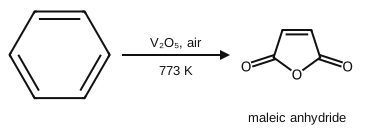
Concept: Catalytic air oxidation of benzene over V2O5 at ≈ 773 K breaks the aromatic ring.

  1. 2C6H6 + 9O2 → 2C4H2O3 (maleic anhydride) + 4CO2 + 4H2O.
  2. Benzoic acid, benzaldehyde and benzoic anhydride all keep a C6H5– group; benzene has no side chain to oxidise to them.

Short trick: Benzene + V2O5/air → maleic anhydride; naphthalene + V2O5/air → phthalic anhydride.

Answer: (D) Maleic anhydride

अवधारणा: लगभग 773 K पर V2O5 पर वायु द्वारा बेन्ज़ीन का उत्प्रेरकी ऑक्सीकरण ऐरोमैटिक वलय को तोड़ देता है।

  1. 2C6H6 + 9O2 → 2C4H2O3 (मैलेइक ऐनहाइड्राइड) + 4CO2 + 4H2O।
  2. बेन्ज़ोइक अम्ल, बेन्ज़ैल्डिहाइड तथा बेन्ज़ोइक ऐनहाइड्राइड सभी में C6H5– समूह बना रहता है; बेन्ज़ीन में कोई पार्श्व शृंखला नहीं है जिसका इनमें ऑक्सीकरण हो।

शॉर्ट ट्रिक: बेन्ज़ीन + V2O5/वायु → मैलेइक ऐनहाइड्राइड; नैफ्थलीन + V2O5/वायु → थैलिक ऐनहाइड्राइड।

उत्तर: (D) मैलेइक ऐनहाइड्राइड

NEET UGChemistryHydrocarbons – oxidation of benzeneNEET UG 2015 · 25 Jul Shift 1